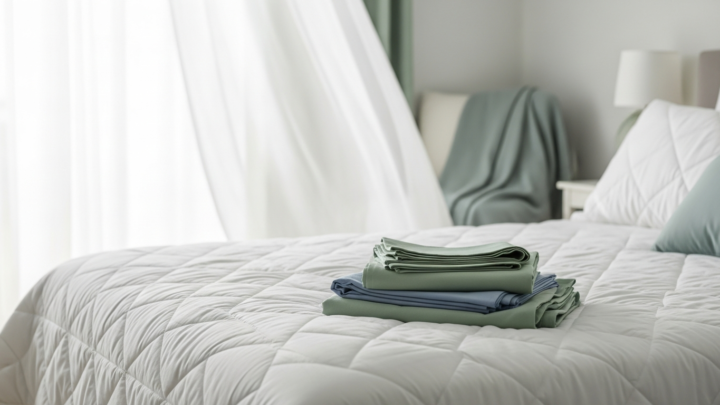
Terry towelling waterproof mattress protectors have been around for decades—and in an era of slim microfibre and crinkly plastic-backed covers, they still hold their ground. If you’re protecting a bed against bedwetting and you’re unsure whether the classic terry option is worth the bother, here’s what you need to know.
## What Is a Terry Towelling Waterproof Mattress Protector?
A terry towelling waterproof mattress protector combines a soft, looped cotton terry surface with a waterproof backing—typically polyurethane (PU) laminate or a similar membrane. The result is a two-layer product: one side is absorbent and comfortable against the fitted sheet, the other is waterproof and sits against the mattress.
Most fit like a standard fitted sheet, with elasticated corners that grip the mattress. They’re machine washable, tumble-dryable, and designed to be used under a fitted sheet rather than on top of it.
## Why Terry Towelling Fell Out of Fashion
The market shifted toward thinner, lighter covers—partly because they’re cheaper to produce, and partly because retailers found “silent” and “barely-there” easier to sell. Modern microfibre protectors are thin, quiet, and dry quickly. They appealed to parents who didn’t want a child to know protection was in place.
Terry towelling, by contrast, is visible, has some bulk, and takes longer to dry. That made it easy to position as old-fashioned. The reality is more nuanced.
## Where Terry Towelling Still Has a Clear Advantage
### Comfort and breathability
The looped cotton surface is soft and breathable. For children who sleep warm, sweat easily, or have sensory sensitivities around fabric texture, natural cotton fibres tend to be better tolerated than synthetic alternatives. The feel against the skin (through a sheet) is less plastic-like than thinner laminates—though the waterproof membrane is still present.
If you’re supporting an autistic child with bedwetting and sensory aversion to certain fabrics, the overall tactile experience of the bed matters. Terry towelling may be less likely to generate complaints about the bed feeling “wrong” or “crunchy.” That’s an important consideration when maintaining a calm bedtime environment.
### Absorbency buffer
Unlike a thin microfibre cover, terry towelling has genuine absorbent capacity. If a pull-up or pad leaks during the night—which can happen—a terry protector can absorb a meaningful volume before fluid reaches the mattress. This matters when a child is a heavy wetter or when the overnight product isn’t quite containing everything.
The absorbency doesn’t replace waterproofing—the PU backing still prevents fluid from reaching the mattress—but it reduces immediate spread and pooling that can saturate a sheet rapidly. Some parents find it also reduces laundry because the protector catches leaks the sheet might not.
### Durability
A quality terry towelling protector, if cared for correctly, will typically outlast a thin microfibre equivalent. The laminate can degrade over time—high heat in tumble drying is the main culprit—but the cotton face of a terry protector is more robust under regular laundering than synthetic fabrics.
When bedwetting is ongoing over months or years, that durability matters. Replacing protectors every few months adds up. A well-made terry product washed on a sensible cycle is a good long-term investment.
### Noise
This can be a double-edged sword. Some terry protectors are quieter than crinkly plastic-backed alternatives—the cotton surface dampens sound. However, the PU membrane underneath can still produce noise when the child moves. If noise disrupts sleep or you want to prevent the child noticing the protection, no protector is completely silent. Terry tends to be better than vinyl-backed options but may not be entirely noiseless.
## Where Terry Towelling Falls Short
### Drying time
The main practical drawback is that terry towelling protectors take longer to dry than thin synthetic covers. If you need the bed remade after a wet night, this matters. A tumble dryer helps, but high heat can degrade the waterproof membrane—lower temperatures and longer cycles are recommended, which takes more time.
If managing multiple wet nights per week, having two protectors in rotation (one on the bed, one in the wash or drying) is advisable. This applies to any protector type but is more relevant with terry.
### Bulk
Terry protectors add slightly more bulk under a fitted sheet than microfibre alternatives. For most children and beds, this makes little difference. However, if a child is sensitive to the feel of a higher or less firm mattress, it’s worth noting.
### Cost
Good-quality terry towelling protectors tend to cost more than basic synthetic options. Budget versions exist, but a poorly laminated cheap terry protector isn’t better than a decent microfibre one—the quality of the laminate determines whether the mattress stays dry, regardless of the face fabric.
## How to Choose a Terry Towelling Protector Worth Buying
Not all terry protectors are equal. Consider these factors:
– **Laminate quality:** Look for PU backing rather than plain vinyl or PVC. PU is more flexible, quieter, and longer-lasting. Some products specify this; many do not.
– **Terry depth:** Thicker, denser terry loops offer more absorbency and a softer feel. Very thin “terry-touch” products may be mostly synthetic despite the name.
– **Elastication:** A full elasticated skirt (around all four sides) provides a more secure fit than corner-only elastic, especially on deeper mattresses.
– **Washing instructions:** Confirm the product can be machine washed at 60°C—important for hygiene—without voiding the waterproof guarantee. Some cheaper options cannot.
– **Depth compatibility:** Check the declared mattress depth the protector fits. A poor fit offers no protection if it pulls off during the night.
## Terry Towelling vs Other Bed Protection Options
A terry towelling protector safeguards the mattress. It doesn’t replace overnight containment—the child who wets the bed will still soak the sheet and protector surface; the mattress is protected from damage and odour.
For frequent wet nights, layering makes sense: a good pull-up or taped brief for containment, combined with a bed protector to catch leaks, and a quality mattress protector underneath. Terry is one component, not a standalone solution.
If leaks occur at the legs or back from a pull-up, understanding why those leaks happen is important—not just catching them. The child’s sleeping position and product design influence leaks more than many realise. For more, see the article on [why overnight pull-ups leak](https://www.sleepsecurenights.com/why-overnight-pull-ups-leak-the-design-problem-that-has-never-been-properly-solved/).
For children prone to front or back leaks depending on sleep position, the article on [prone vs supine sleep position and bedwetting](https://www.sleepsecurenights.com/prone-vs-supine-sleep-position-and-bedwetting-why-how-your-child-sleeps-determines-where-they-leak/) is helpful.
## Using a Terry Protector Alongside a Bed Pad
Some families use both a waterproof mattress protector and a disposable or reusable bed pad (bed mat). The protector goes under the sheet; the pad sits on top. The pad is changed after a wet night; the sheet and protector only if the pad fails.
This combination reduces laundry and speeds up middle-of-the-night changes. A terry mattress protector works well as the base layer.
## A Note on Children With Sensory Needs
For children with autism or sensory processing differences, the feel and noise of bed protection can affect sleep. Terry towelling is generally more sensory-friendly than crinkly or stiff options, but the best way to know is to try it. If texture is an issue, consider the overall bedding and sleepwear choices.
Managing bedwetting in neurodivergent children can be emotionally challenging. If family stress becomes overwhelming, see the article on [managing bedwetting stress as a family](https://www.sleepsecurenights.com/managing-bedwetting-stress-as-a-family-what-really-helps/).
## Should You Buy One?
Terry towelling waterproof mattress protectors are not suitable for every family but deserve evaluation based on their actual benefits rather than outdated perceptions. If comfort, breathability, durability, and absorbency matter—and your drying setup can handle longer cycles—a good-quality terry protector is a practical choice.
If reassessing your overnight protection strategy, consider that most bedwetting pull-ups weren’t designed for sleep. The mattress protector is just one part of an effective system. For more, see [why most bedwetting pull-ups weren’t designed for sleep](https://www.sleepsecurenights.com/bedwetting-pull-ups-were-not-designed-for-sleep-what-that-means-and-why-it-matters/).
For an overview of protection options, see the [bedwetting by age guide](https://www.sleepsecurenights.com/bedwetting-by-age-what-s-normal-what-s-not-and-what-to-do/). The key goal is keeping the bed dry, the child sleeping, and avoiding unnecessary night-time changes. If terry towelling helps achieve that, it’s doing its job.