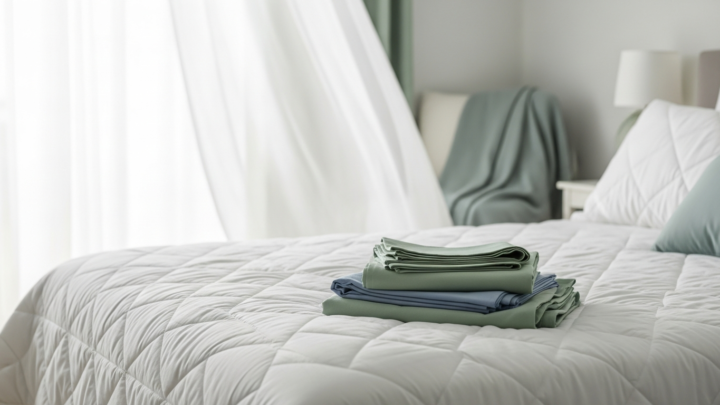
If you’re shopping for a waterproof mattress protector to handle regular bedwetting, the John Lewis range is frequently recommended — and for good reason. It’s widely available, reasonably priced, and backed by a trusted retailer. But does it hold up to nightly use? This review examines the John Lewis waterproof mattress protector honestly, with bedwetting families specifically in mind.
## What John Lewis Offers: A Quick Overview
John Lewis sells several waterproof mattress protectors under its own label, typically available in standard UK bed sizes from single to super king. The most commonly purchased for children’s beds are:
– **John Lewis ANYDAY Waterproof Mattress Protector** — the entry-level option, quilted, with a polyurethane (PU) membrane backing
– **John Lewis Waterproof Quilted Mattress Protector** — a mid-range version with a slightly thicker fill and softer hand feel
– **John Lewis Specialist Synthetic Waterproof Mattress Protector** — aimed at allergy sufferers, with a tighter weave and enhanced barrier properties
Prices vary, but the ANYDAY version typically costs between £20–£35 for a single, which is competitive for a fitted-sheet style protector from a high street retailer. Always check the current John Lewis website for up-to-date pricing, as ranges change seasonally.
## How It Performs for Bedwetting: The Real-World Test
### Waterproofing reliability
The PU membrane backing used across the John Lewis range is a standard approach — similar to many mid-range protectors. Under moderate wetting, it performs well. The barrier holds, and liquid doesn’t penetrate to the mattress. However, under heavier or repeated wetting — especially in children who soak through a pull-up entirely — some parents report variable results, with liquid pooling on the surface rather than being absorbed, and sometimes seeping through the fitted-sheet seal at the edges.
This is a common limitation of single-layer PU membrane designs rather than a specific fault of John Lewis products. For children with large overnight volumes, a protector alone may not suffice; adding a bed pad on top can provide extra absorption.
### Noise and feel
Many families, particularly those with sensory-sensitive children, find the rustling of a waterproof layer problematic. The John Lewis ANYDAY protector produces a noticeable crinkling sound — less than budget supermarket alternatives, but present. The quilted mid-range version is quieter and softer, making it more suitable for children sensitive to texture or sound in bed. For children with autism or sensory processing differences, this distinction is worth considering.
### Breathability
PU-backed protectors are less breathable than fully encased or terry-topped options. Some children — especially heavy sleepers or those who run warm — may find these protectors contribute to a warmer sleep environment. This isn’t usually a dealbreaker but is worth noting if your child already struggles with overheating at night.
### Washing performance
John Lewis protectors are machine washable at 60°C, which is important for hygiene when managing regular bedwetting. Most parents find they withstand frequent washing well, retaining waterproof properties over many cycles — though, as with all PU-membrane products, high-heat tumble drying can degrade the backing. The recommendation is to tumble dry on low or line dry where possible.
## Fit and Sizing
The fitted-sheet design fits snugly on standard UK mattress depths, but families with deep-fill or memory foam mattresses should check the depth specifications before purchasing. A loose-fitting protector can shift during the night, creating gaps that may lead to leaks. John Lewis typically specifies a maximum mattress depth in the product details — worth verifying, especially on older or non-standard beds.
One practical limitation: fitted-sheet protectors do not cover the sides of the mattress. If your child rolls to the edge or if liquid tracks sideways before being absorbed, the mattress sides remain unprotected. A full-encasement protector can address this, though these are less commonly stocked in standard retail.
## Honest Strengths and Limitations
### Where it works well
– Light to moderate overnight wetting with a good-quality pull-up already in place
– Families needing a reliable backup rather than primary containment
– Easy availability — can be purchased in-store or online with quick delivery
– Consistent sizing across a trusted retailer, useful for replacement or matching existing bedding
– Generally withstands frequent washing required for bedwetting
### Where it falls short
– Heavy wetters who soak through nightwear regularly may find this protector insufficient alone
– The ANYDAY version is noisier than some alternatives — upgrading to the quilted version may benefit sensory-sensitive children
– No side protection on fitted-sheet designs
– Less breathable compared to other options
## How It Compares in the Wider Market
The John Lewis waterproof mattress protector is mid-market. It is more reliable than many supermarket own-brand versions and better finished than basic disposable-backed protectors. It does not match specialist continence products — such as those from medical suppliers or dedicated bedwetting brands — in absorption capacity or barrier reliability, but it is not marketed for that purpose.
For families managing frequent, heavy wetting, the protector works best as part of a layered system: a high-capacity pull-up or taped brief as the primary layer, a bed pad on top for added absorption, and the protector as the final barrier. Used together, it performs reliably.
If leaks persist despite using the protector, it may be worth exploring why — often, the issue is with the nightwear product rather than the protector itself.
## Layering Strategy: Getting More from Any Mattress Protector
No mattress protector is designed to manage bedwetting on its own. It is the last line of defence, not the first. The most effective approach involves:
1. **Primary containment:** A well-fitted, high-capacity pull-up or brief suitable for your child’s size and wetting volume
2. **Secondary absorption:** A washable or disposable bed pad placed where your child sleeps (not necessarily covering the whole mattress)
3. **Barrier layer:** The fitted waterproof mattress protector underneath
This layered approach means a single wet night rarely requires a full strip and remake — just changing the top pad, which reduces workload. If night changes become overwhelming, practical strategies are discussed in related guides.
For insights on the pull-up or nightwear layer — where most leaks originate — see the article on why overnight pull-ups leak.
## Is the John Lewis Waterproof Mattress Protector Worth Buying?
For most families, yes — with realistic expectations. It is a reliable, straightforward product at a fair price from a trusted retailer. It won’t solve heavy-wetting problems alone, and it isn’t designed to. But as part of a comprehensive nighttime management system, it performs its role well.
If choosing between options, consider your child’s typical wetting. Light wetting mostly contained in the pull-up? The ANYDAY version should suffice. Regular heavy wetting? Consider the quilted version plus a bed pad, or look into specialist products for higher capacity.
For broader guidance on managing nights, including selecting nightwear, discussing bedwetting with your child, and when to seek clinical advice, see the guide on bedwetting by age.