The Night Hawk bedwetting alarm is one of the more established wearable alarm systems available in the UK, often recommended by continence nurses and appearing regularly in NHS bedwetting clinic guidance. If you’re at the stage of considering alarm therapy and want to understand what it involves, this guide explains how it works, who it suits, and its limitations.
What Is the Night Hawk Bedwetting Alarm?
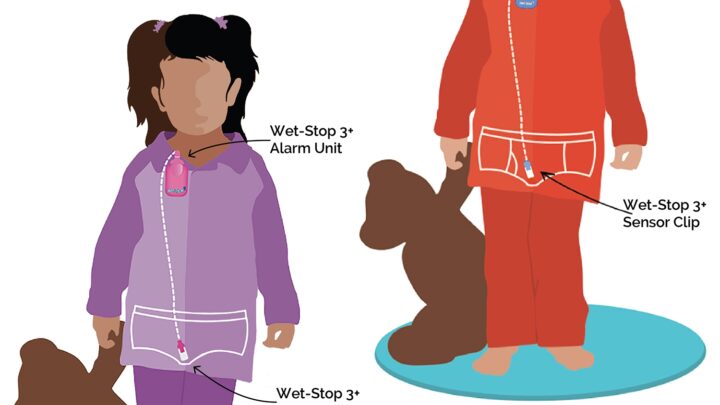
The Night Hawk is a wearable enuresis alarm — a small sensor clips to the child’s underwear or pull-up, detects the first drops of moisture, and triggers an alert to wake the child before a full void occurs. The alarm unit attaches to the shoulder or collar area of nightwear.
It uses a two-part system: a moisture-detecting sensor connected by a thin wire to an alarm unit. When wetness is detected, the alarm sounds — and in some versions, vibrates — to rouse the child. The goal is to condition the bladder over time, either to hold more urine through the night or to wake the child when the bladder is full.
The Night Hawk is made in Australia and distributed in the UK. It is one of several wearable alarms on the market alongside the Malem, Rodger, and DRI Sleeper systems.
How Does It Compare to Other Wearable Alarms?
Sound and vibration
The Night Hawk offers both auditory and vibration alerts. This is important for children who are very deep sleepers — vibration alone may be insufficient, and having both options increases the chance of waking the child. The sound is loud by design; this is intentional and not a flaw, though it may wake other household members initially.
If your child consistently sleeps through the alarm, you’re not alone — this is a common challenge. Practical guidance on what to do when your child sleeps through the bedwetting alarm can help regardless of the brand.
Sensor design
The sensor clips to the gusset of the underwear. It has a standard snap-clip design, similar to most wired alarms. The wire connecting the underwear to the shoulder unit can occasionally detach during sleep, especially in children who move around a lot at night. This is a known limitation of wired systems generally.
Durability and build quality
The Night Hawk has a reasonable reputation for durability. The units are washable (sensor only — the alarm unit should not be submerged), and replacement sensors are available if needed. Build quality is generally considered solid for a medical device.
Who Is the Night Hawk Suited To?
Children aged 5 and older with primary nocturnal enuresis
Alarm therapy is typically recommended for children aged 5 and over who have never achieved consistent dryness. NICE guidance (CG111) supports alarm therapy as a first-line treatment for primary nocturnal enuresis when the family is prepared. The Night Hawk is appropriate in this context. It is not a quick fix — alarm therapy usually requires 8–12 weeks of consistent use to see results, with some families needing longer.
If you’re unsure whether alarm therapy is suitable, it’s helpful to learn more about what causes bedwetting before starting treatment.
Motivated children who can participate
Alarm therapy requires the child’s active participation — to wake when the alarm sounds, get up, and go to the toilet. A child who is deeply resistant, very young, or not bothered by wetting is unlikely to respond well regardless of the alarm used. Motivation is key.
Families who can manage the process
Most children do not wake independently when the alarm sounds initially. A parent usually needs to be nearby to hear it and wake the child. If night changes and disruption are already exhausting your household, consider reading about managing bedwetting stress as a family before starting a program that may initially disturb sleep.
Children without significant sensory sensitivities
The wired design, clip attachment, and alarm sound may be problematic for children with sensory processing differences or autism. Many children with ASD find wired alarms intolerable — the wire, clip sensation, and loud noise can be distressing. Wireless systems (such as the Rodger alarm, which uses conductive underwear) might be a better option for sensory-sensitive children. The Night Hawk is not necessarily the first choice for this group, though individual responses vary.
What the Night Hawk Won’t Do
It’s important to understand that the Night Hawk, like all enuresis alarms, is a conditioning tool — not a cure or guarantee. Systematic reviews suggest about 65–70% of children who complete a full alarm course achieve dryness; some do not respond or relapse after initial success.
If alarm therapy has already been tried without success, switching brands like the Night Hawk is unlikely to change the outcome. Next steps may include desmopressin, combination therapy, or clinical review. For families who have tried alarm, desmopressin, and lifting without success, see this guide.
The alarm does not prevent bedwetting on nights when it triggers late or the child does not wake in time. A mattress protector and good bed layering are essential alongside any alarm program.
Where to Get It
The Night Hawk is available for purchase from several UK suppliers and online retailers. It is not routinely available on NHS prescription, though some continence services loan alarm units — check with your GP or continence nurse about loan options before buying.
If your GP has dismissed your concerns about bedwetting, guidance on what to do when you’re not being heard may help you navigate the referral process.
Practical Tips If You Use the Night Hawk
- Run both sound and vibration simultaneously from the start — vibration alone is rarely enough for deep sleepers.
- Position the sensor carefully so it makes good contact with the gusset area. Poor positioning can cause missed triggers.
- Expect the first two to four weeks to be challenging. The child may not wake independently at first, and you may need to wake them. This is normal.
- Keep a simple record of wet nights, timing, and whether the child woke — this helps track progress even if it’s not immediately obvious.
- Don’t stop at the first dry night. NICE recommends continuing until 14 consecutive dry nights are achieved.
- Check the wire connection each night before bed — connection issues are a common reason for missed triggers.
The Bottom Line on the Night Hawk
The Night Hawk bedwetting alarm is a reputable, durable wired alarm system suitable for a standard alarm therapy program. It is not superior to other trusted alarms like the Malem, as research does not support strong brand-specific claims. The key to success is consistent use over time, with a motivated child and a family committed to the process.
If choosing an alarm, select one that is easy to attach, loud enough to wake your child (initially with your help), and robust enough for 12 weeks of nightly use. The Night Hawk meets these criteria. If you’re unsure whether alarm therapy is right for your child, consult your GP or continence nurse for guidance before starting.