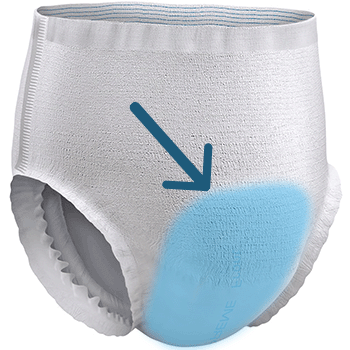
Switching from a supermarket pull-up to a clinical-grade product — such as a taped brief, a high-capacity pad, or a prescribed incontinence item — is often described by parents as a last resort. It shouldn’t be. The concept of “escalation” in bedwetting management is often misunderstood and can do more harm than good, making families feel that choosing a more effective product signifies failure. It does not. This article explains why moving to a clinical product is a practical decision, not a defeat — and why reframing it matters for everyone involved.
## What “Escalation” Actually Means — and What It Doesn’t
In medical contexts, escalation simply means moving to a more intensive or targeted intervention when a previous approach isn’t sufficient. It’s neutral. For example, a GP escalating treatment from paracetamol to stronger analgesia isn’t admitting defeat — they’re matching the treatment to the need. The same logic applies here.
Bedwetting products vary in absorbency, fit, and containment capability. A DryNites pull-up is designed for light to moderate wetting in a child who may become dry soon. A Tena Slip or Molicare taped brief is engineered for full, uninterrupted bladder voids — often multiple — in a person who may remain incontinent for an extended period. These are different products solving different problems. Using the appropriate product for your child’s situation isn’t a step backwards; it’s a step towards effective management.
## Why the Stigma Around Clinical Products Is Unwarranted
There is a cultural discomfort associated with incontinence products designed for older children and adults — especially those resembling infant nappies. This discomfort is rooted in social perceptions, not in the product’s value. A taped brief on a ten-year-old with severe nocturnal enuresis isn’t the same as a nappy on an infant. The function is protection; the context is entirely different.
For children with conditions such as ADHD, autism, or other neurodevelopmental differences, the timeline for achieving consistent nighttime dryness may be longer or may never occur. In these cases, a pull-up designed for an eight-year-old neurotypical child may be under-specified. Clinical products exist precisely because the need exists. Using them isn’t a statement about the child; it’s a practical choice.
If your child sleeps better, wakes up dry, and avoids the distress of wet sheets at 3 am because of a better-fitting, higher-capacity product, that is a positive outcome. Full stop.
## What Clinical Products Offer That Consumer Products Don’t
The practical differences are significant:
– **Higher absorbency:** Clinical products like Tena Slip, Molicare, Attends, and similar are designed to contain full bladder volumes repeatedly, including in lying-down positions where standard pull-ups often fail. The physics of overnight leaking explains why products that work during the day may not be effective at night.
– **Better containment architecture:** Taped briefs typically have more robust leg cuffs and waistband seals than consumer pull-ups. Leg leaks are the most common overnight complaint, and clinical products are designed to address this.
– **Larger size ranges:** Consumer products usually stop at around age 15 or a certain weight. Clinical products cover adult sizes, which is important for older teenagers and larger children.
– **Potential for NHS prescription:** Many clinical incontinence products can be prescribed via a GP or continence nurse, often free at the point of use. This is especially relevant for children with underlying conditions. The gap in the market means clinical products are often the best available option, not a fallback.
## The Key Question: Is Your Current Product Effective?
The only question that matters is: is this product preventing wet beds, protecting sleep, and keeping your child comfortable?
If the answer is no — if you’re changing sheets at 3 am, layering booster pads, double-wrapping the mattress, and still experiencing leaks — then the product is not suitable for your child’s needs. This is a product issue, not a parenting failure. Many families cycle through multiple products because consumer-grade pull-ups weren’t designed for the level of output some children produce overnight.
Moving to a clinical product isn’t giving up on dryness; it’s recognizing the reality of the situation and remaining open to future progress. These goals are not mutually exclusive.
## Addressing Concerns About the Child’s Perception
Parents often worry that using a “nappy-like” product might harm a child’s self-esteem or imply that dryness isn’t expected. In reality, many children feel relief when a product that works is in place — sleep improves, anxiety decreases, and the distress of repeated failures diminishes.
How you introduce the product matters. Talking openly and practically about bedwetting, without shame, helps. Explaining that “this product works better for your body right now” conveys competence and care, not defeat.
## When Clinical Products Are the Clear Choice
Consider clinical products if:
– Consumer pull-ups leak frequently, regardless of size or brand
– Your child produces high urine volumes overnight
– Your child has a neurodevelopmental condition where dryness isn’t expected soon
– Your child is older or larger than standard products accommodate
– Physical disabilities or complex care needs make night-time changes difficult
– The current product disrupts sleep for your child or you
– You’ve tried alarms, desmopressin, and other interventions without success
These scenarios reflect a realistic assessment of needs, not failure.
## Access and Prescriptions
If a clinical product could help, consult a paediatrician or continence nurse. They can assess your child’s needs and often prescribe appropriate products. If referrals are difficult, there are practical steps to advocate for your child’s needs, including communicating clearly with your GP.
Private clinical products vary in quality and price. Brands like Tena, Molicare, Attends, Abena, and Lille offer a range of options worth trialling before buying in bulk.
## Reframing the Decision
The language around bedwetting often frames dryness as the goal and products as temporary. For many children, that’s true. For others — especially those with persistent enuresis, neurodevelopmental differences, or medical complexities — it isn’t. Viewing clinical products as a failure rather than a solution can cause unnecessary distress, laundry, and disrupted nights.
Choosing a clinical product is a practical, informed decision. It’s not giving up; it’s providing your child with better sleep and comfort. If guilt arises, remember: the measure of good management is whether your child is comfortable, rested, and protected. That’s what truly matters.
For support on managing the emotional aspects of long-term bedwetting, see how other parents cope without burnout.